
Koya in Tampa: A Trip to Our Rival City’s Michelin Restaurant
I know this website is called Orlando Bites, but I guess this will be the rare exception where I venture outside of my domain to visit a restaurant in our rival city of Tampa. The Michelin Star scene in Tampa is not as abundant as Orlando, but they still have a good selection of establishments. My wife decided to surprise me with a birthday dinner at Koya, and we’d both been craving sushi for a while now.
After my recent ranking of all Orlando’s Michelin stars and now having eaten at Koya Tampa, my assessment is that it ranks even below Soseki.
What Is Koya?
Koya is a Japanese restaurant according to its own website, and Michelin guide categorized it as such. From the pictures I’d seen online, I expected it to have a sushi focused menu, especially with the decor and everything. But now after having the meal, I’ll say it’s leaning more towards Thai-Japanese fusion with western cooking techniques.
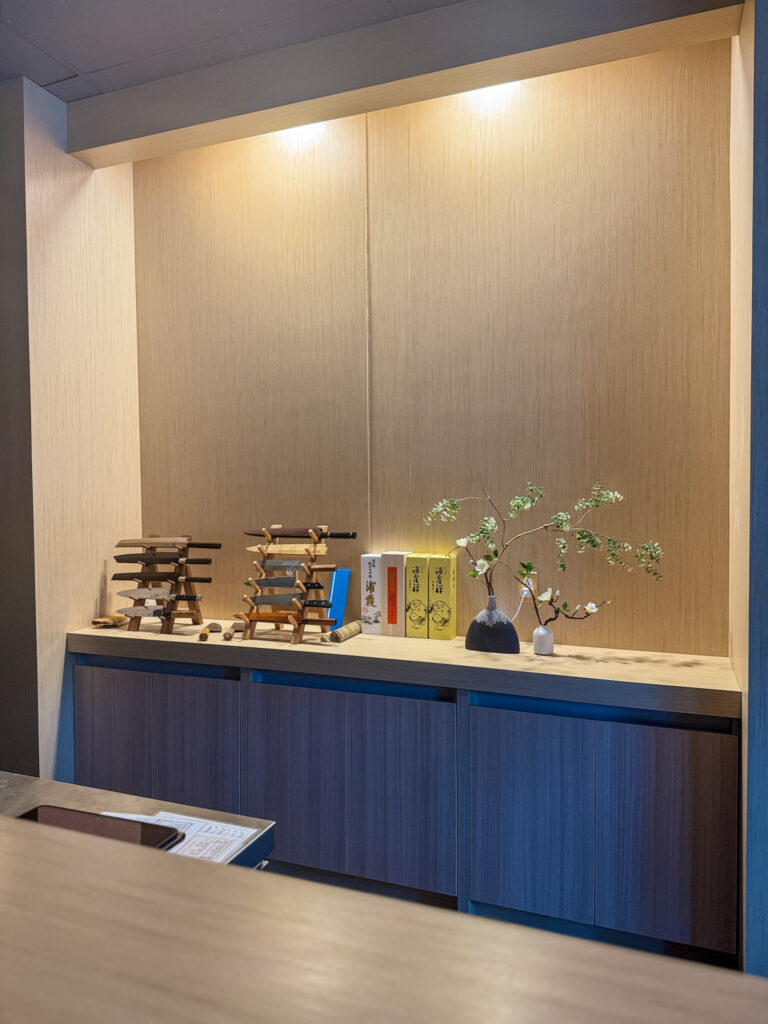
The Atmosphere: Not What I Expected
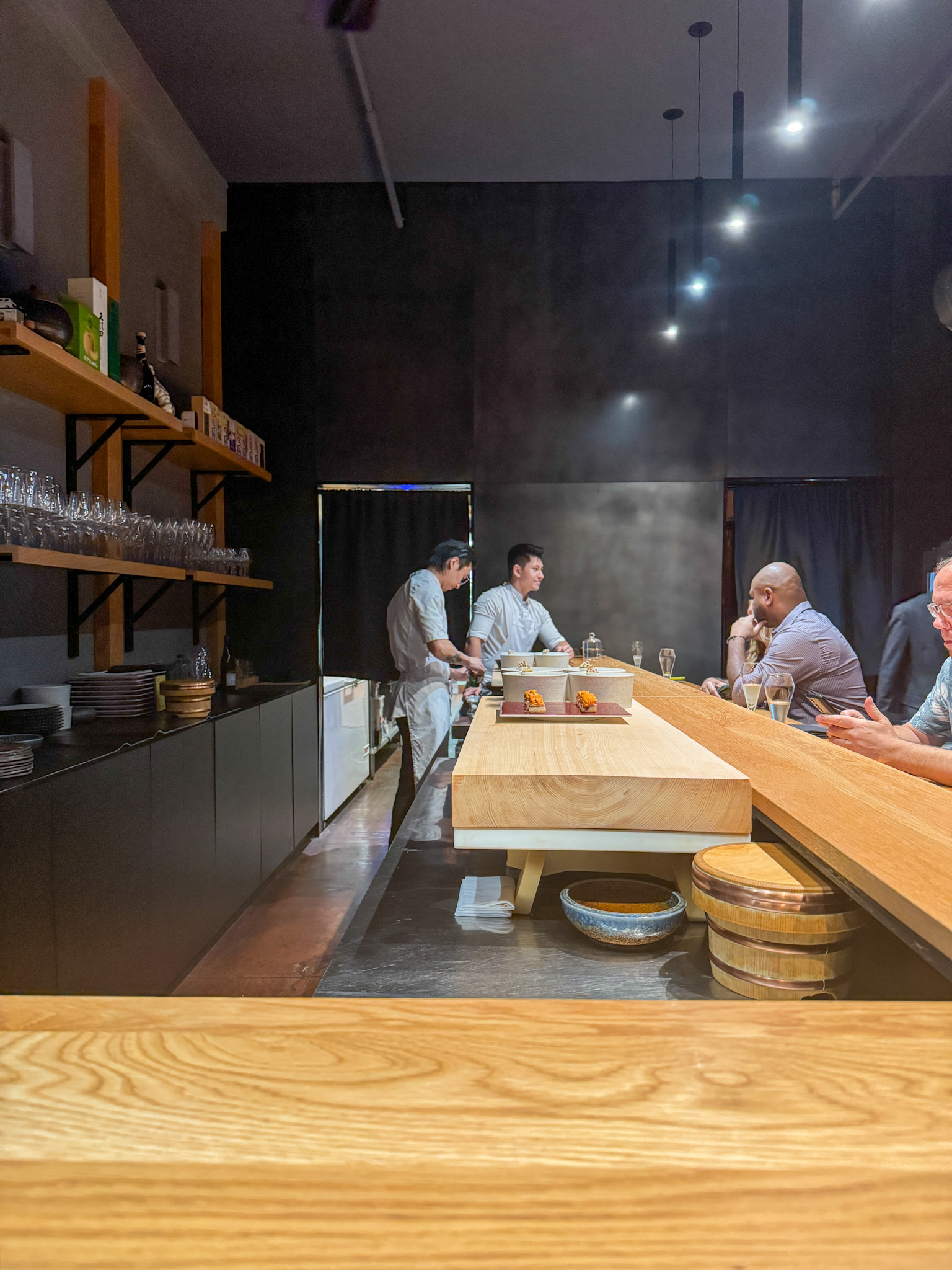
As soon as I sat down at the sushi counter, I scanned the setup of the restaurant. While I’m not an interior designer or even remotely qualified to critique the design of a restaurant, I still have a certain expectation from a place charging well over $300 per person after service fee and tax.
The place just feels cluttered and rustic, which is not the typical environment a high end Japanese restaurant should be. There’s a whole stack of glasses, cups, and plates sitting on the back of the kitchen counter like a restaurant equipment showroom. The two dry aging fridges are just sitting out behind the customer seating area. The exposed brick wall and the dangling lightbulbs right on top of each guest seat remind me of the stereotypical interrogation rooms you’d see in television shows.
This is not the minimalist, quiet atmosphere I am used to when sitting down for an omakase.
What We Were Served at Koya
Amuse / Tom Yum / Cannelloni / Bafun Uni
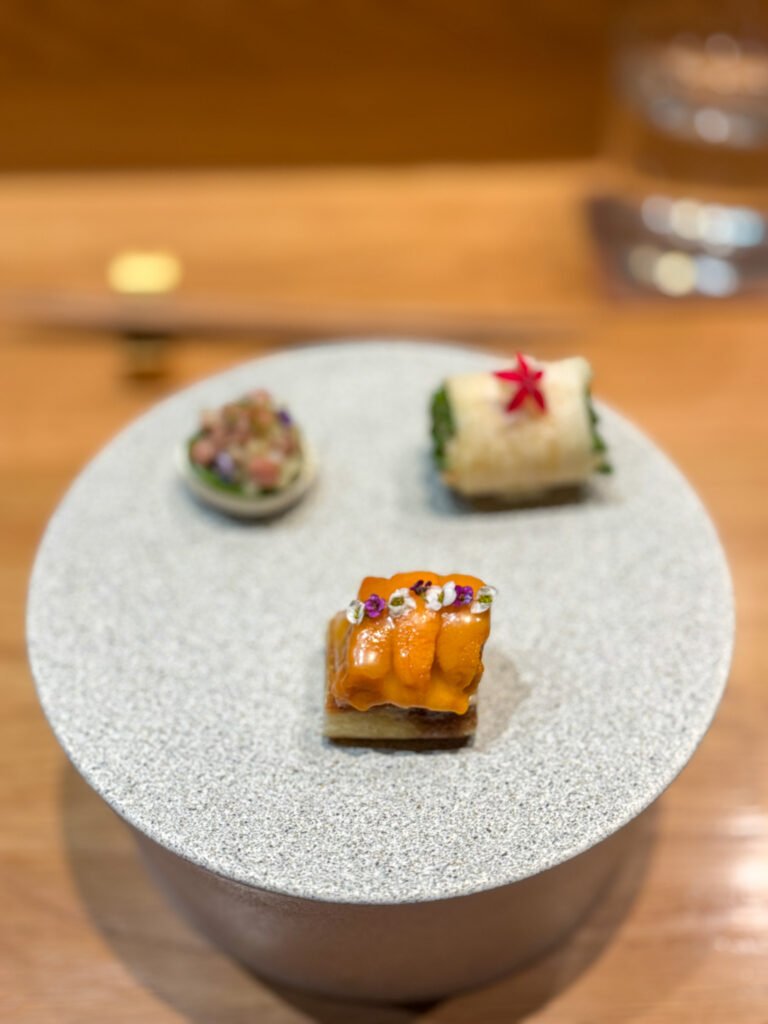
The first course consisted of three small bites which were sitting for a while in front of us while we waited on the dinner to get started. Not sure why it took so long, but possibly because one pair arrived a little bit late. I was hungry after a long drive and was staring laser beams into the amuse-bouches.
The uni on toast was muted. The flavor of the balsamic glaze and sweetness from the bread completely overwhelmed the uni. Maybe it’s catering towards the guests that may not be used to the unique flavor of uni, but I want to actually taste the briny, sweet, rich flavor. I couldn’t find it here.
The little crab cannoli was just okay. I think the outside wrapper was starting to get a little soggy or stale from sitting there too long. The flavors were nothing special, just tasted like a mayo based crab salad in a subtly crunchy shell.
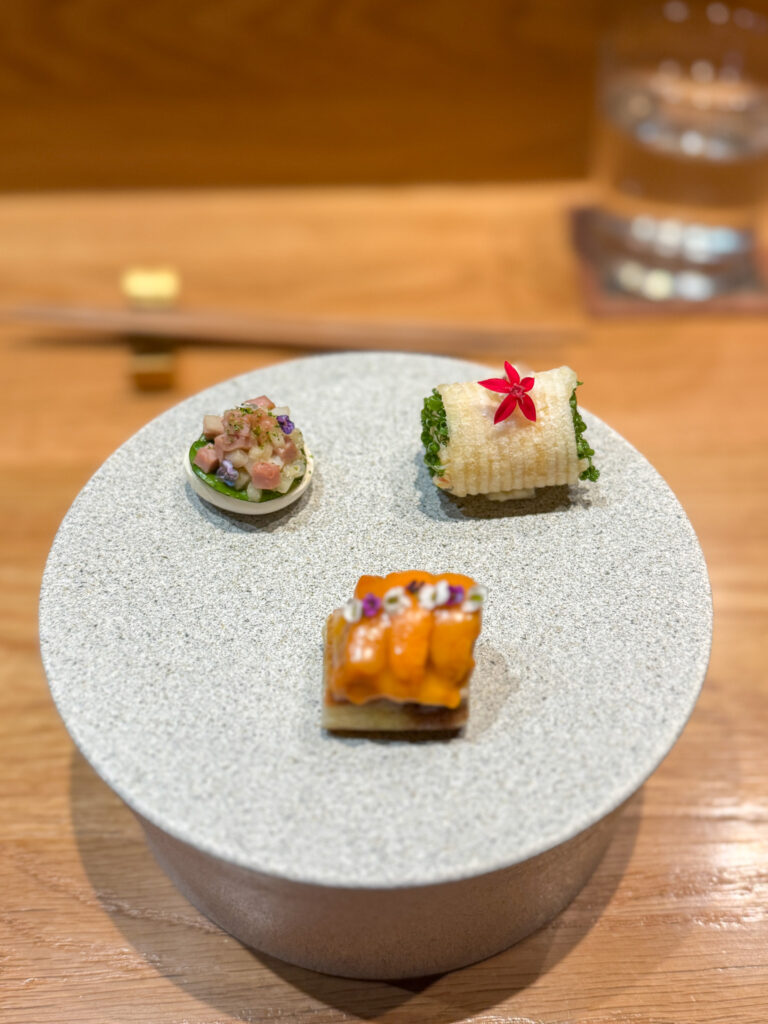
The Thai sausage and shrimp on a little meringue cookie was herbaceous and interesting. The head chef is of Thai descent, and Thailand is the master of combining sweet and savory, but I do not like this pairing.
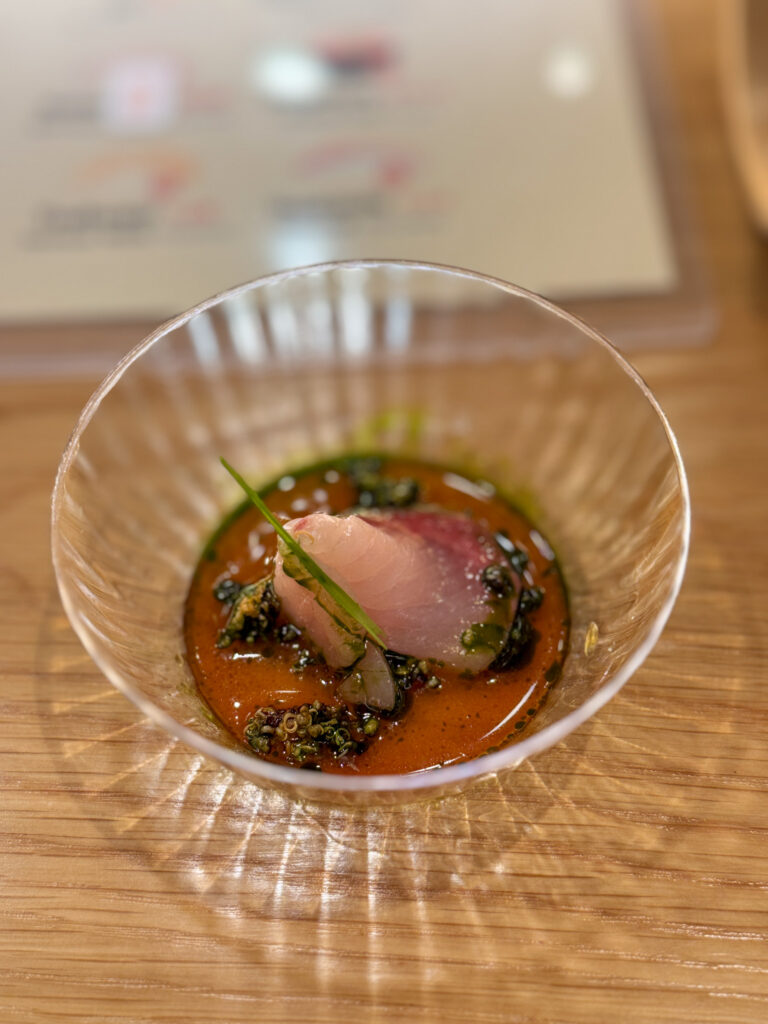
The Sushi Course / Akami / Shima Aji / Sake
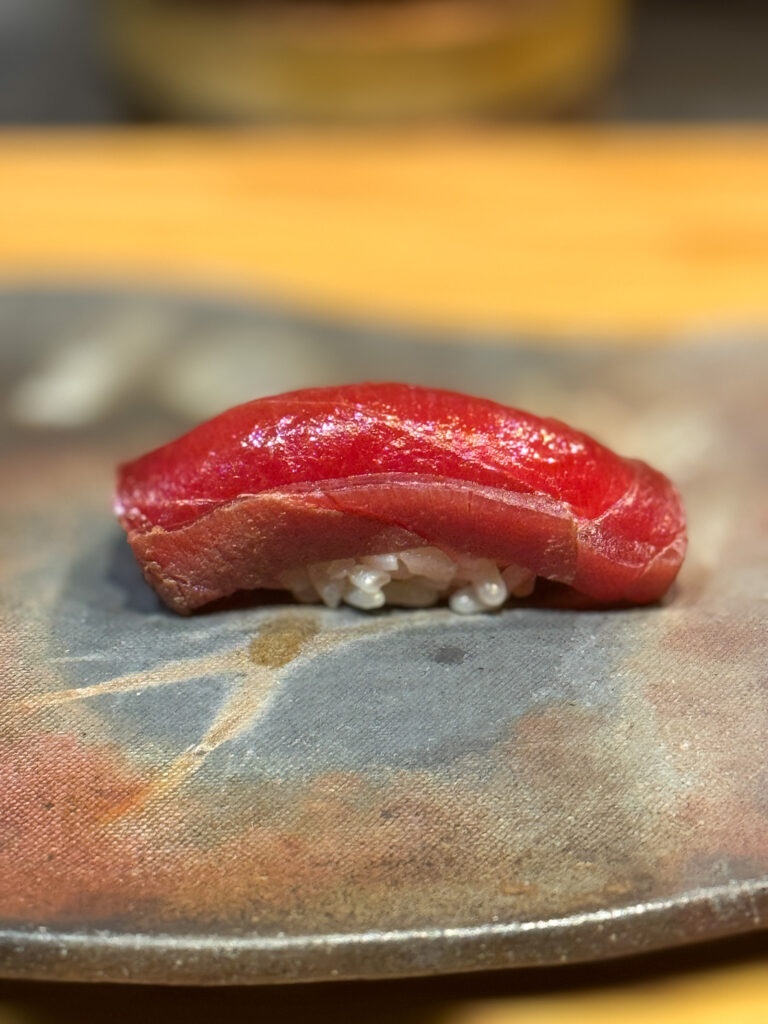
And now the sushi course begins, and this is where my real disappointment in the night lies. While the Michelin guide for Koya makes it sound like a good thing that they do not follow the typical parade of nigiri but instead opted for more creative dishes, I’ll have to disagree and say that I was expecting more.
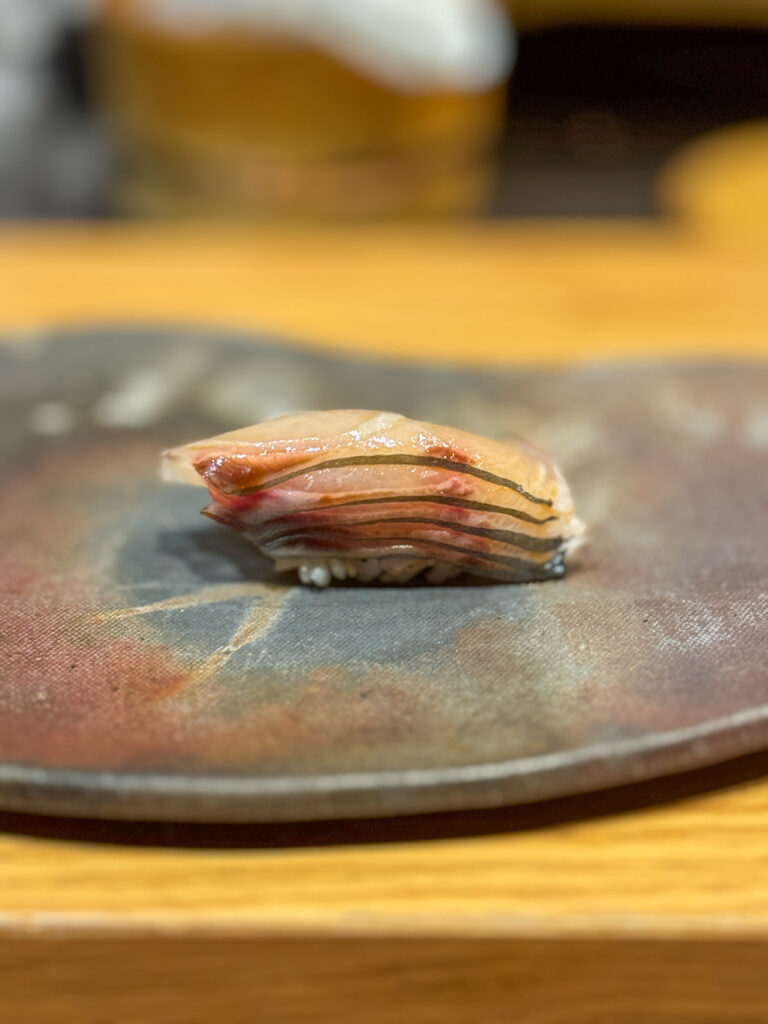
We were served a total of three nigiri. So more like a few floats rather than a whole parade. The fish was not cut in front of us, which I found highly unusual since every other high end place I’ve been to, from Natsu, Soseki, to Kadence, the chefs will all slice the fillets on the spot.
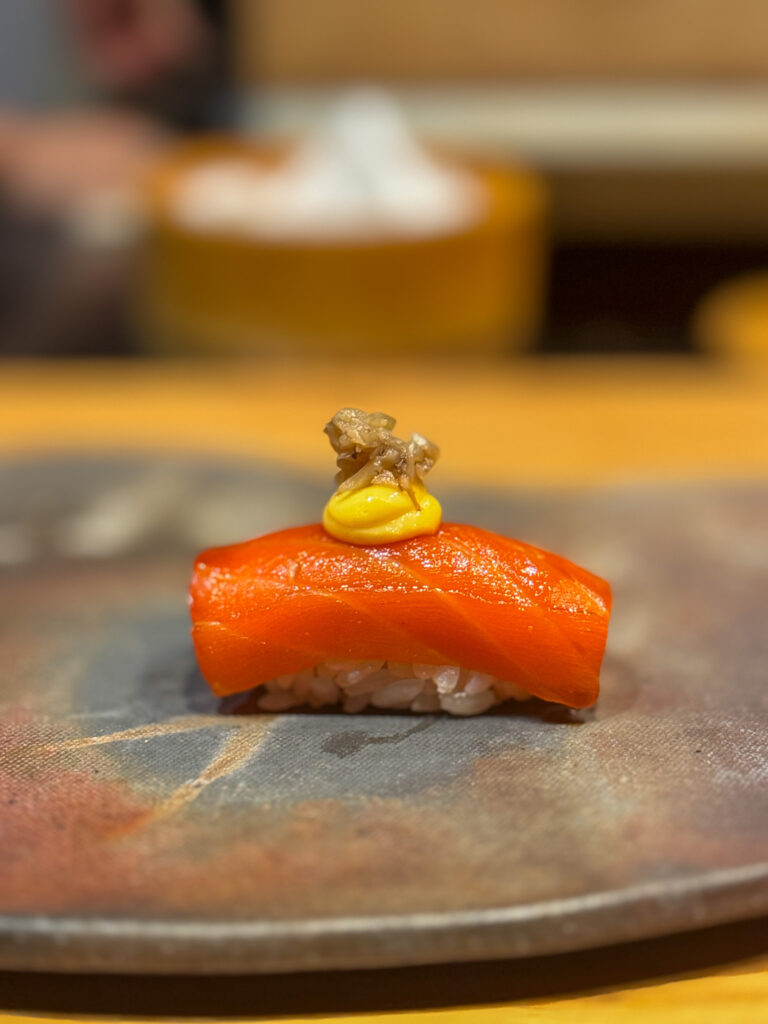
My next grievance is that the fish are very entry level basic pieces. Lean bluefin tuna, not even chutoro or otoro, and also salmon. While ora king salmon is arguably the best salmon for sushi, it’s unconventional and too safe for a fine dining establishment that’s leaning into Japanese cuisine. I’d prefer something more exotic or seasonal that feels like I’m getting value out of this limited sushi intermission.
Negi Toro Hand Roll
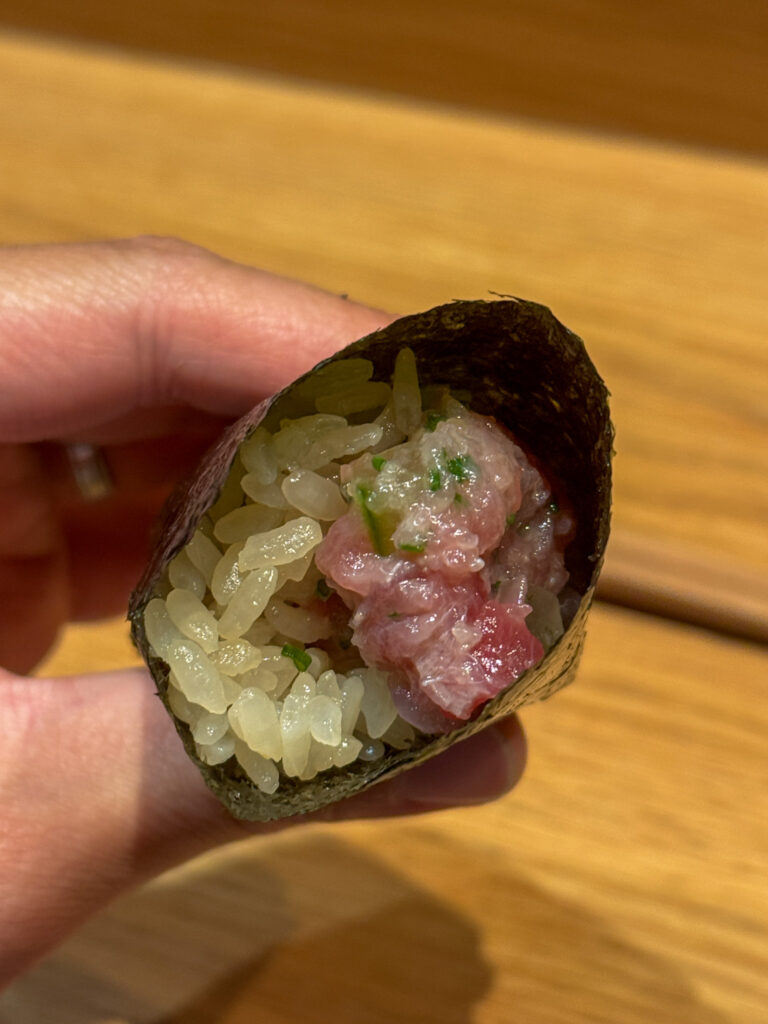
The negi toro hand roll was also average. More like an obligation course to signal the end of the sushi portion than something with a lot of thought put into it. There was also too much rice, and they added leftover pickled ginger which was lacto fermented. I wasn’t a fan of either because it tasted more like Chinese suancai radish rather than Japanese pickled ginger. It was aggressively salty unlike the sweet and spicy ginger I’m used to eating with sushi as a palate cleanser.
Ika & Golden Chicken
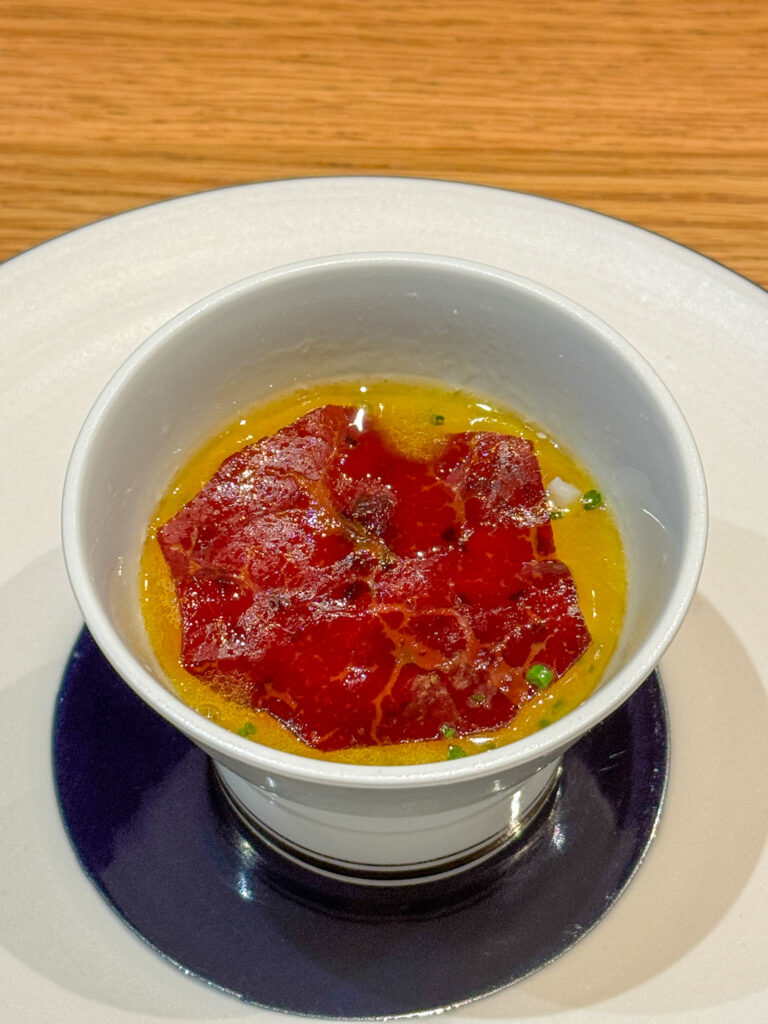
The chicken soup with the beef jerky cracker was good. Reminded me of an elevated can of Campbell’s chicken soup concentrate, and I don’t mean that in a bad way. A tad salty, but the usage of squid cut into strands of noodles was a playful touch.
Kamo
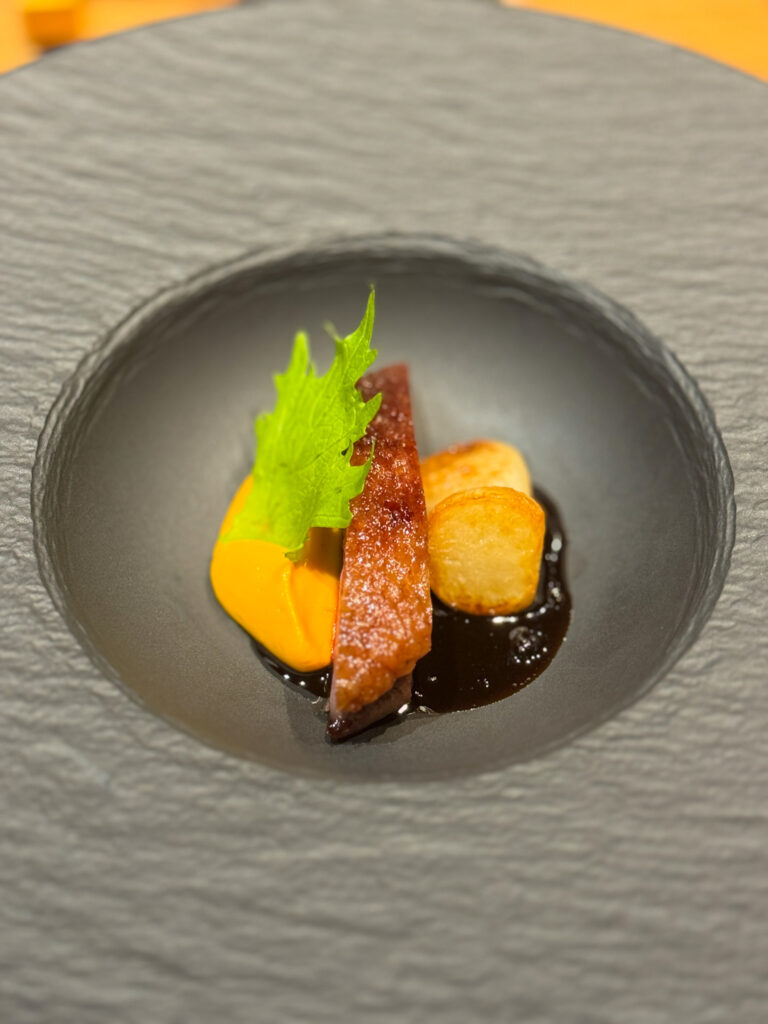
The duck dish was a very standard vanilla fine dining dish. It’s good but again very basic. A good sliver of duck with a vegetable puree and some kind of sauce, the usual gastrique, demiglace, or reduction. It’s something you’d see at any fancy French inspired place. I’m being extra nitpicky, but it is a good dish, just generic.
Scallop with White Chocolate Sauce
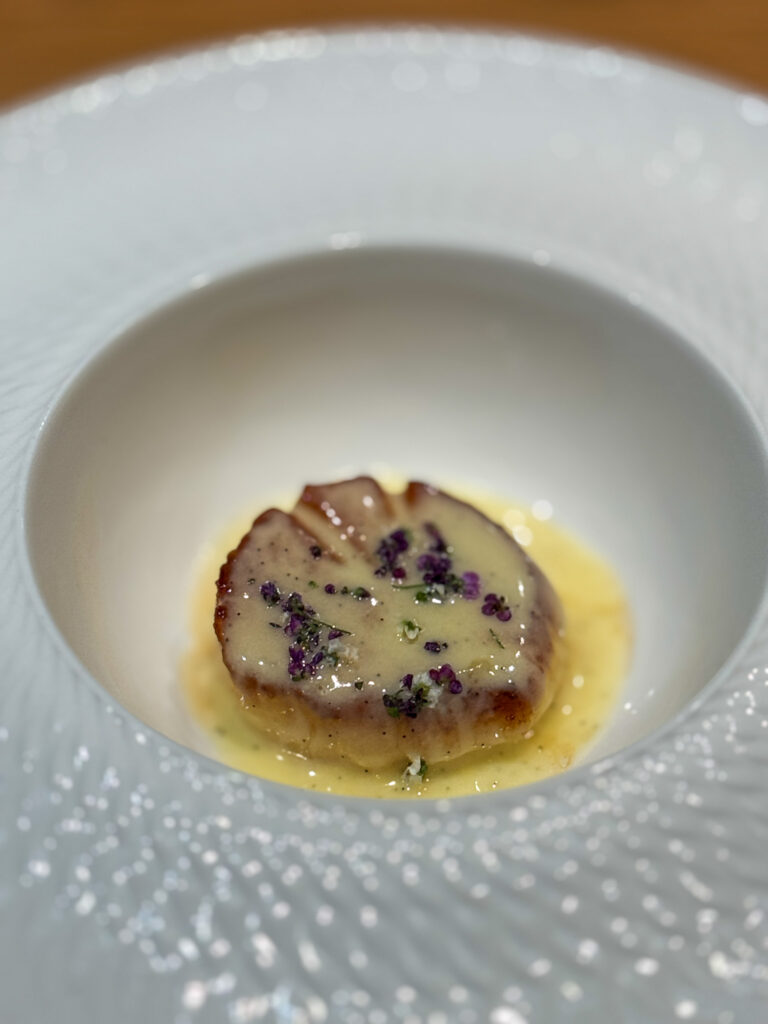
The scallop dish, I’m torn on. I like a well cooked scallop, but the natural sweetness of the scallop was completely overpowered by the white chocolate sauce. Chocolate is an ingredient that has an overwhelming presence, and the white chocolate version is just extra cloyingly sweet and had a hint of condensed milk flavor.
Truffle
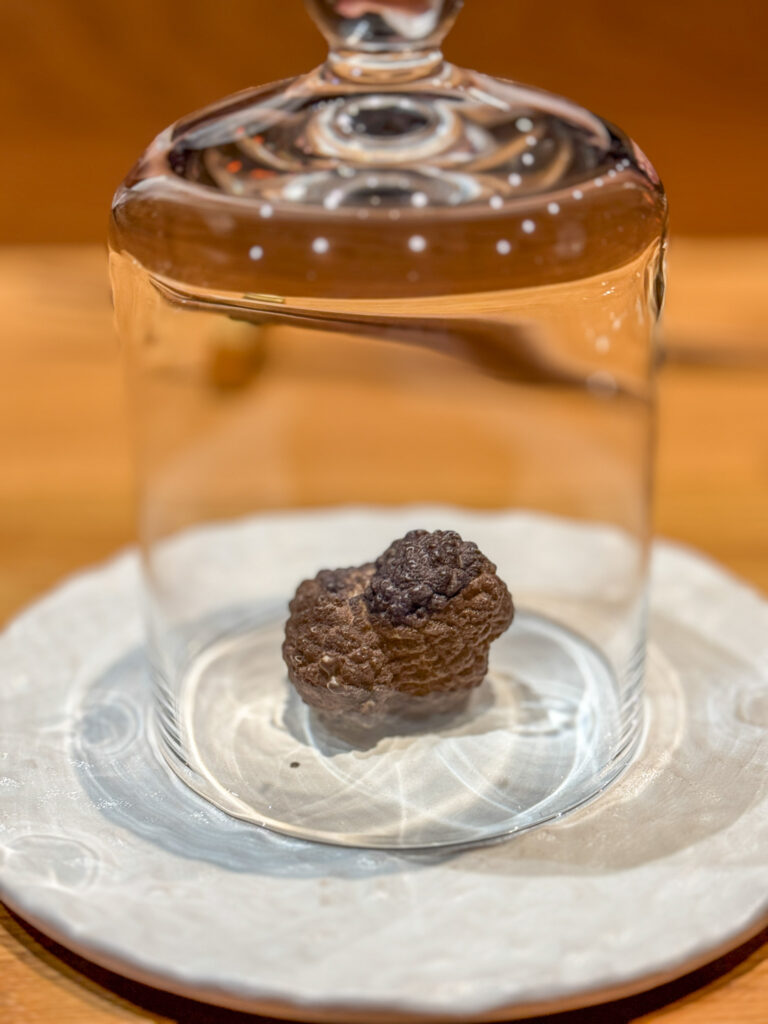
The desserts, just like the dinner courses, were very hit or miss but mostly misses.
The little pastry shaped like a truffle was so good. Not too sweet, very moist, almost like a bread pudding with a nice thin shell.
Salted Banana Caramel
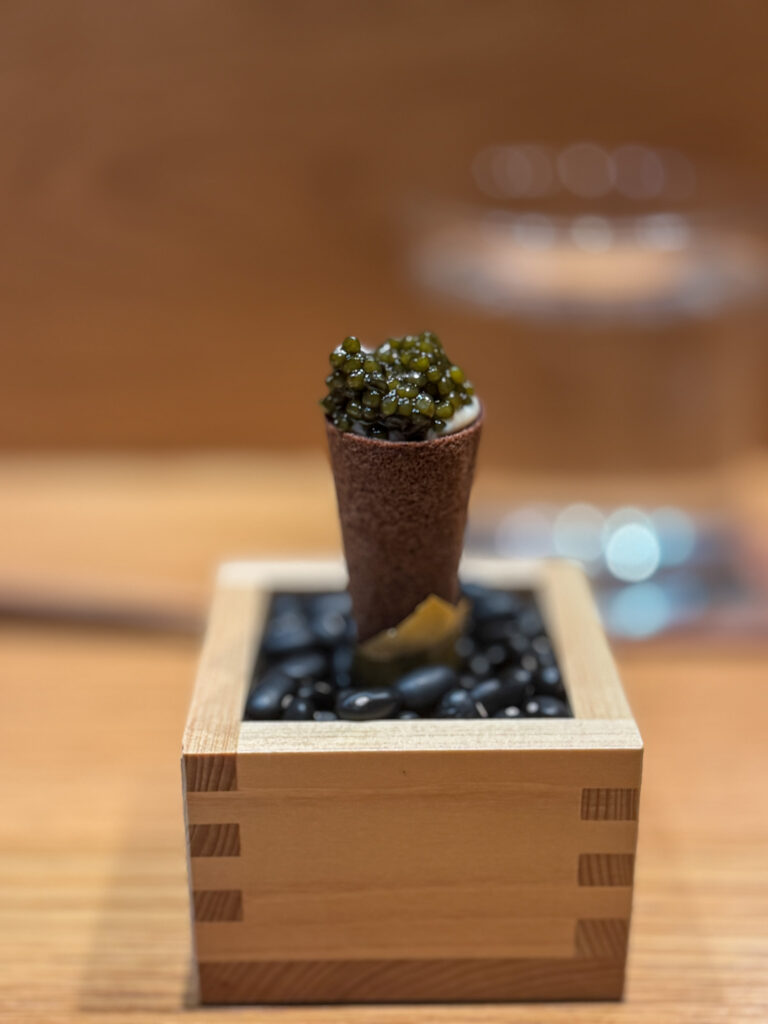
It was served with a caviar cone which was okay. Bananas just overpower everything. That’s why you don’t leave bananas in the fridge with other ingredients because they overtake everything. So I didn’t like the banana cream being paired with the brininess of the caviar. The caviar cone is usually an amuse-bouche popularized by Thomas Keller, but now it’s kind of overdone.
Tom Kha
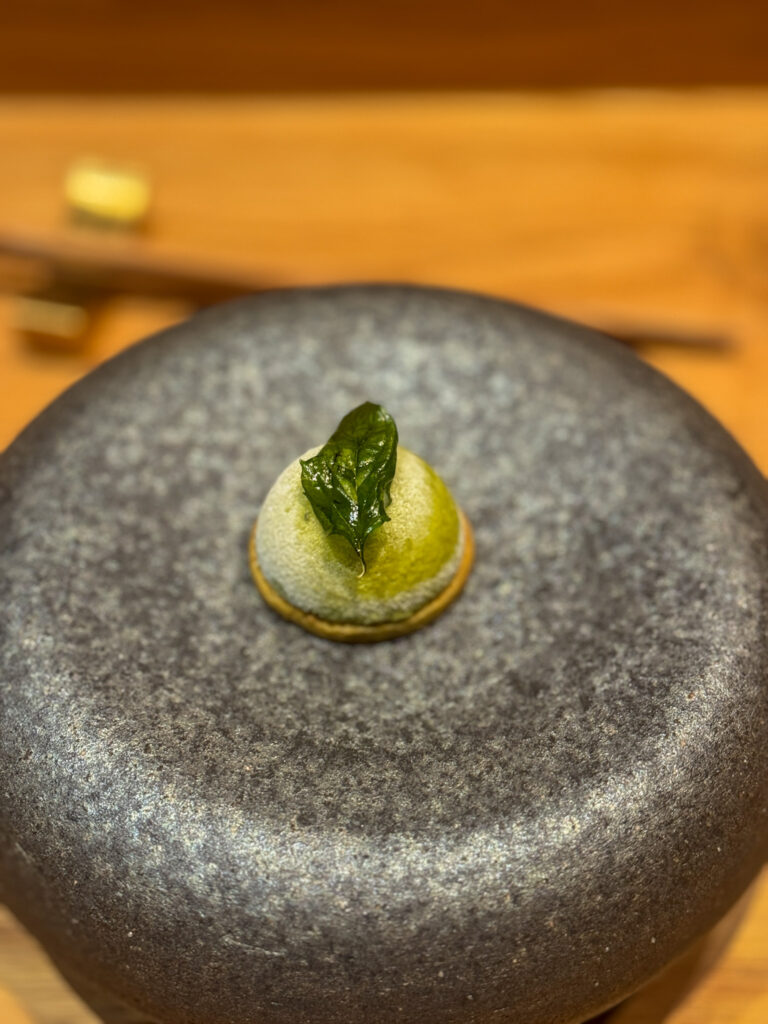
The tom kha ganache tasted more savory than sweet, overbearingly herbaceous and sour. I didn’t like it at all. It felt like the desserts were out of order. This would’ve worked better as a palate cleanser before the other desserts.
The Verdict: Is Koya Tampa Worth Over $300 Per Person?
Overall, this meal missed the mark for me. I can feel the chef worked his Thai background into Japanese cuisine, but I personally found the flavors clashing a lot.
In a fine dining meal, I’m not looking to be completely stuffed by the time the dinner is over. That’s not the point. I’m looking for innovation, intent, execution, and all of that falls under my perceived value of the meal. Unfortunately, this meal does not justify the well over $300 price tag after service charge and tax.
The meal was neither exceedingly inventive nor executed well, and the amount of courses with the meager portions makes me believe this meal was not well intentioned either. A total of about 12 courses if I count the caviar cone and the truffle dessert as separate courses, even though they were served simultaneously. This was the smallest portioned Michelin starred dinner I’ve had, and I actually left pretty hungry.
Maybe it’s because I’ve eaten at too many chef’s counters and my expectations have ballooned to unrealistic standards. Because this lady on the opposite end of the Koya counter was smiling and closing her eyes in bliss at every bite. It was honestly heartwarming to see someone so content with everything while I was critical of every dish.
To some people, this place deserves a Michelin star, but I find it falls below the standards of other Michelin stars in Florida. Based on my experience, Koya in Tampa would rank below even Soseki if I was doing a Florida Michelin stars ranking, which puts it at the bottom of my list.
Tips for Visiting Koya Tampa
- Budget well over $300 per person after 20% service charge and taxes
- Expect Thai-Japanese fusion not traditional omakase
- Only 3 nigiri pieces if you’re expecting a sushi parade
- Small portions so don’t expect to leave full
- Cluttered, rustic atmosphere not typical minimalist Japanese
- About 12 courses total but very small
- Consider Orlando’s Natsu, Kadence, or even Soseki for better value
Have you been to Koya in Tampa? Did your experience differ from mine?

One Comment